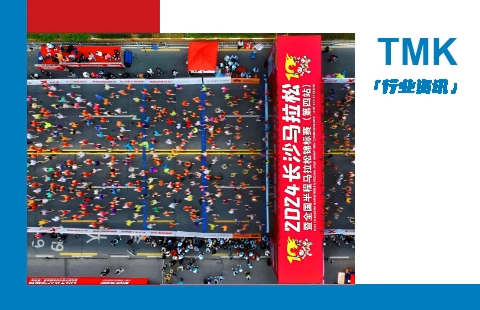
On 20 May 2025 the Chinese Athletics Association published five group standards, including fully automatic timing and finish photography. Among them,T/CAAB 0003-2025, the chip timing sensor specification, took effect on 27 May 2025 as the core technical rule for athletics timing.It marks a more formal, higher-performance stage for timing at Chinese athletics events.
“Event timing needed a common rule”

Marathons, trail races and race walks grew quickly in China, and timing failures became a regular complaint.Chip readswent missing, product quality varied, and service had no shared process.
“New technology needed a standard”
RFID, differential satellite positioning and inertial sensors changed how sport is timed. Without one rule, accuracy, file formats and service quality differed widely between events, and systemscannotmeet the demand for precision, live data and a stable system.
“A step toward international practice”
Chinese athletics needed a timing standard that matches international practice and local conditions. The new standard fills that gap andgives domestic events one technical measure, and a base for Chinese timing technology abroad.
“A clearer definition of the system”
The standard definesthe “chip timing sensor system for athletics”its classes, parts and appearance.
“Performance stated in numbers”
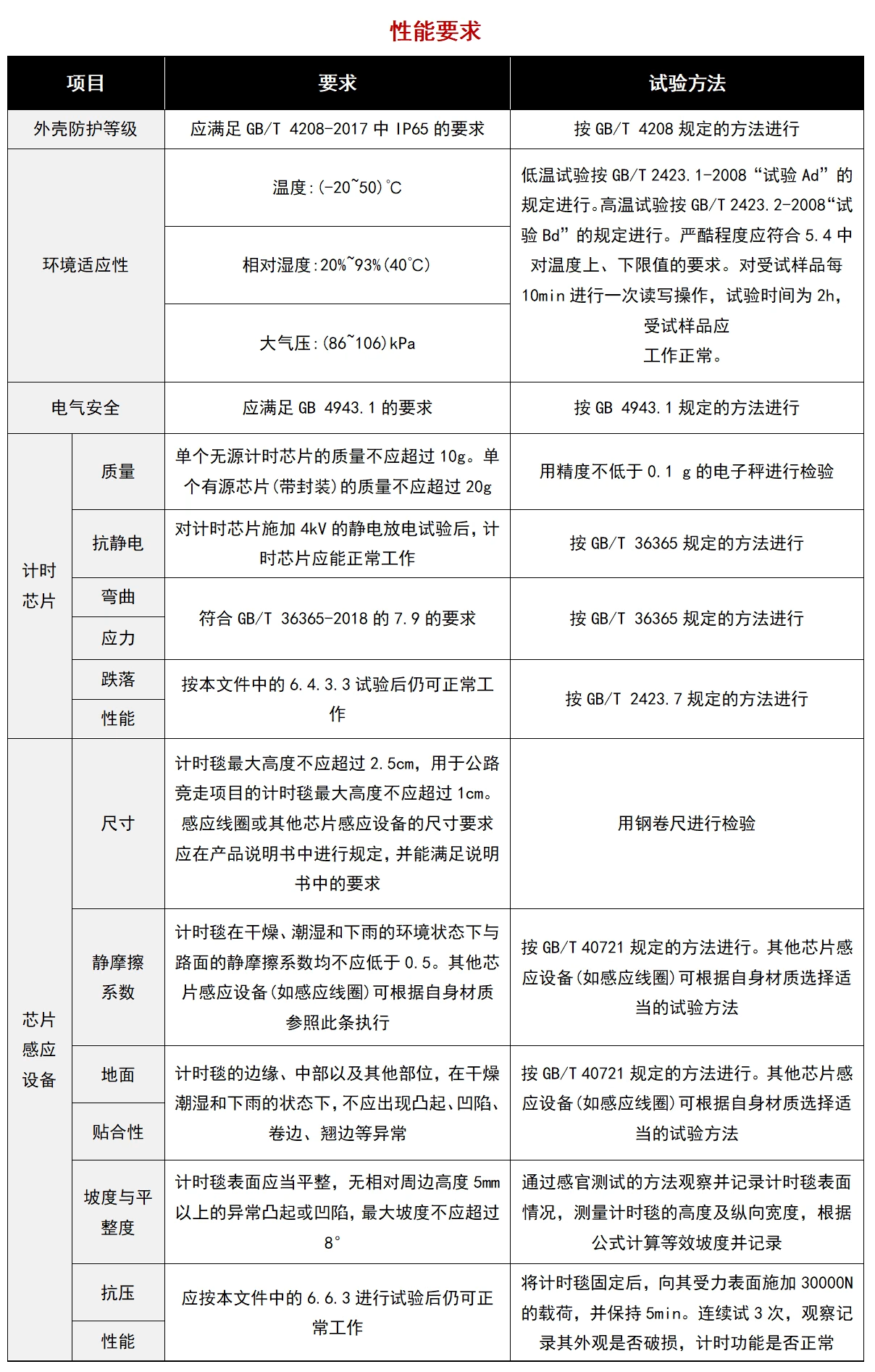
For the system and each part, the standardsets concrete figures for the key measures. That covers climate (−20°C to 50°C, 20% to 93% relative humidity), electrical safety, chip durability and storage, the mat (30,000 N load, static friction at least 0.5), and the data unit.
“Core functions written down”
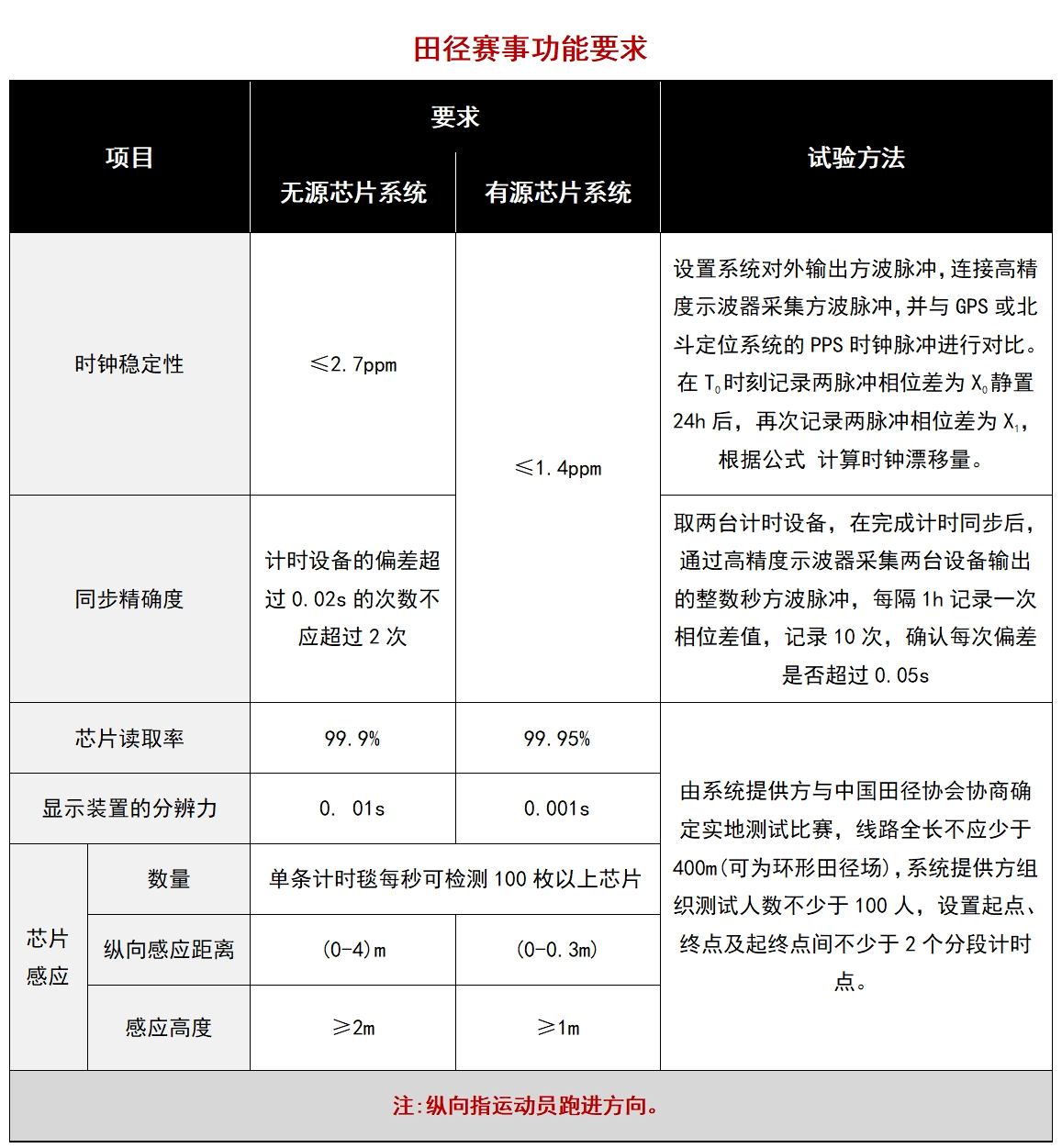
The standard states what the timing system must do.Read rate at least 99.9%. Resolution at least 0.01 s passive and 0.001 s active. Clock stability at most 2.7 ppm passive and 1.4 ppm active. A data unit may exceed 0.05 s of error no more than twice.


1. Framework: one set of terms
It covers chip timing for road, track and trail. It defines chip (tag), sensing equipment and data unit, and names the three parts of the system.
2. Requirements: measured performance
It sets appearance, connectors, labels and power so the gear is safe and usable, and it requires the equipment to survive cold, heat and humidity. The mat must take a broadcast truck and a dense field, and it must not shift when athletes cross at speed.
3. Proof: tests that can be repeated
To check the performance chapter, the standard sets tests for climate, load, friction, read rate, resolution, clock stability and timing error. Those tests are how a product is judged compliant.
4. Use: quality through the product’s life
Inspection rules, plus marking, packing, transport and storage, cover the product from the factory to the event. Factory and type tests, sampling and pass/fail are written down.
1. One technical rule for the trade:Design, production, test and acceptance now share one technical basis,instead of no standard or a vague one.
2. Better products:Clear performance limits push makers to improve and drop products that fail,and raise the quality of timing systems made in China.
3. Fair results:High read rate, resolution and clock stability cuttiming error and missed reads, so each athlete’s time is right and the race stays credible.
4. Easier events:A shared specification makes systems easier to compare, install and maintain.
5. Closer to international practice:The standard draws on international practice. Stricter requirements help Chinese events be recognised abroad.


TMK was a lead drafter. Years of timing work went into the architecture, the performance figures and the test methods.
TMK is a sports-technology company. Its products includetiming equipment: TMK Platform Ⅲ, TMK Platform Ⅲ Pro active, and the folding ground antenna;event software: TMK Workbench V4; andon-site event service. The products are sold in more than 60 countries. Since 2015 they have timed thousands of marathons and road races in China and elsewhere.


TMK works in sports timing and aims to give customers careful, capable service. More products are on the official site.