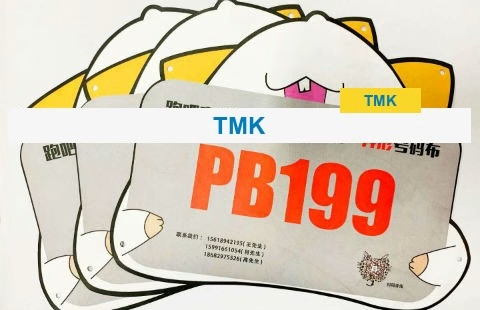
A bib carries the number, the event mark and the theme, and it is how identity, results and photos are found. The usual bib is a 240 × 200 mm rectangle. Events that want a different look need a different shape.
TMK supplies hardware, software and bibs. In 2019 an Indigo line, DuPont Tyvek and a one-sided cutting process began producing square, rounded and shaped bibs, in the millions each year.
A shaped bib is cut to the event, not only as a square or a rounded rectangle. In 2019 TMK brought in an Indigo line, DuPont Tyvek, electronic-ink printing and a one-sided cutting process.
Tyvek is flash-spun high-density polyethylene. It resists tearing and puncture, sheds water, breathes, and stays light. Its reflectance makes the number readable from the roadside and from a camera.
Ordinary ink does not hold on Tyvek. TMK’s electronic ink, a plant-based organic and inorganic mix, does, on one side or both. Colour stays even and does not fade in sunlight. Ten thousand standard bibs take three to seven days by the old process. An HP Indigo 6900 at 1200 dpi, about 2.5 seconds a metre, finishes that run in under three hours.
Electronic-ink digital printing
The shape is cut from a die. Tyvek is hard to cut, and an irregular outline is harder. TMK uses a one-sided cut so the printed number is not damaged. Error stays within 3 mm, and can be as small as 0.3 mm. The organizer can send artwork or a brief. TMK does the rest.
TMK one-sided die cutting
Shaped bibs are made in volume at the Yancheng plant. Chips can be stuck on automatically, at a high hit rate. The line is built for short lead times.
Automatic chip application
They were first used on 20 September at the Wuxing Lake run in Yuncheng, Shanxi. A shaped bib is recognisable in a field of rectangles, and runners keep it.
The shape can carry more of the event’s theme, and the bib becomes part of how the race looks.